Day By Day

Wednesday, November 16, 2005

Murder in Lititz -- Putting the Commentary in Context


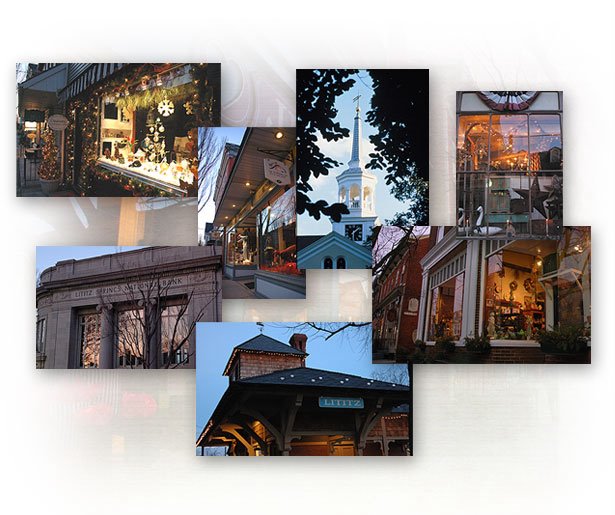
The Borden murder case has come as quite a shock to people around here. "She Who Must Not Be Named" and I travel regularly through the Lancaster area and Lititz has always been one of our favorite stops. It's a beautiful town filled with quaint little shops and stores and lots of historical sites. "She" and her friends like to go there from time to time to spend a couple of hours flitting from shop to shop. While they do their thing, I retire to a local coffee shop to munch pastries, drink coffee, and read architecture and home design books which the place has in abundance. The people I have met there have all been interesting and friendly [about what you would expect for a town that depends heavily on tourist trade] and my experiences in Lititz have always been pleasant.

One of the things that has always interested me about Lititz has been its history. The MSM keeps harping on the fact that the teenagers involved in the murder case were both home-schooled, as if that were remarkable, but home-schooling (usually organized through cooperative groups of several families) is quite common throughout Dutch country as are private religious schools. Many of the residents belong to German pietist sects that have long disdained the public school system. I'm not familiar with the specifics of the Borden and Ludwig families, but in this area home and religious schooling are quite common.

Even within the Dutch region Lititz stands out for its religious history. The town was founded in the middle of the eighteenth century by Count Zinzendorf as a Moravian mission community. It's name, reflecting the historical background of the Moravian Brethren, commemorates a Bohemian village that served as a Hussite refuge three hundred years earlier. For a century after its founding Lititz was a closed religious commune organized according to Brethren principles. The Brethren were pacifists and refused to serve in either the Revolution or the later Indian wars, although they did maintain a hospital to treat military personnel. They had a communal economy in which all land was church owned and was leased to individual families. Theirs was a tightly regulated society with young and old, men and women, married and single people ranked in separate "choirs" [although they were not as strict as other Moravian communities and did not require that choirs live separately from one another]. They also maintained a separate, religiously-based education system.

Even when the commune was dissolved and the town opened to new residents, the tradition of educational separatism persisted. Many of the newcomers were themselves German pietists who felt that education was a family and church, not a State responsibility. To provide proper instruction the Brethren long maintained boarding schools at Lititz that attracted students from as far away as Baltimore and Philadelphia. Linden Hall Seminary, founded in 1748, is today the oldest continually operated girls' school in the country.

So, it is not too surprising to find that young kids of German descent living in Lititz were home-schooled. Non-public schooling is a long tradition around here. People I know who have home-schooled tell me that the internet has been a terrific aid to instruction. As the Borden murders show, though, it also poses significant dangers. It is the internet, not the schooling, that should be the focus of MSM attention.

UPDATE:

It seems that the kid who did the shooting was extremely disturbed. He apparently fantasized about and planned out murders like the one he committed, and he seems to have abducted a girl before. His bizarre nature was apparently noted in Lititz and local residents tried to deal with it informally. Part of that accommodation may well have been forbidding their daughters to have anything to do with him. It's not clear whether or not bringing him to the attention of authorities would have forestalled the tragedy that ensued.

There seems to be severe cognitive dissociation involved in MSM coverage of the murders. I watched a CNN anchor attempt to interview neighbors of the murdered couple after their funeral. The neighbors expressed the common Christian faith that righteous people such as the Bordens had. upon their death, gone to a better place and that the funeral, rather than being an occasion for recrimination and regret, should celebrate that belief. The anchor was completely baffled by and obviously uncomfortable with their responses and kept probing for expression of anger and distress. Finding none, she quickly terminated the interview and moved on to an on-site reporter who could give an account of things more to her liking.

Sigh!

OUCH!

From Ananova:
Rugby fan tells how he lost his tackle

A Welsh rugby fan has spoken out about how he hacked off his own testicles after his team beat England.

Geoffrey Huish, 31, took an agonising ten minutes to perform the op using a pair of blunt wire cutters, says the Sun.

Then he put his severed parts in a blue plastic bag and staggered to a social club to tell fellow Wales fans what he'd done.

Jobless Geoffrey finally collapsed with blood pouring from his groin as horrified drinkers put his testicles in a pint glass of ice.

Read it here.

Ruggers! Sheesh!

Lileks Shoots, He Scores!


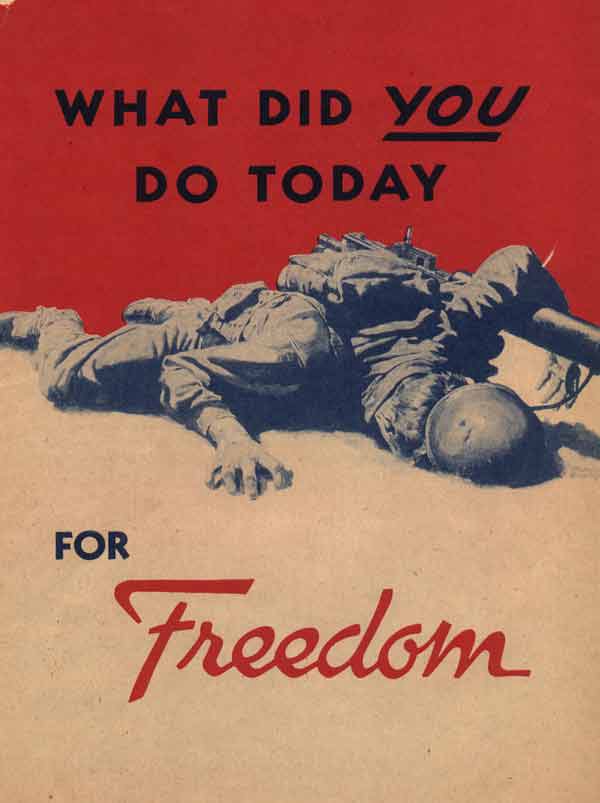
In the midst of the current hysteria over selling the Iraq war, let's look for a little perspective. James Lileks has a neat little archive of WWII-era domestic propaganda. It serves as a reminder of just how brutally manipulative the government was throughout the "good war" and how very far we have come since those days of enforced national unity and maximal "social capital."

By the way, I have heard it asserted several times that during WWII the government censored all images of dead or dying troops in order to "sanitize" the war. So much for that idea....

Check out Lileks' archive here. While you're there look around -- he has a lot of neat stuff -- and buy his latest book.

Tuesday, November 15, 2005

The Articles of Confederation


On this day in 1777, in the city of Philadelphia, the Second Continental Congress passed the Articles of Confederation and submitted it to the States for ratification. For four years the States debated the document and finally, in 1781 Maryland, the last holdout, accepted it and it went into effect.

Usually described as "America's First Constitution" the articles were more in the form of a treaty -- a "league of friendship" -- among sovereign states that bound them to deliberate and act together in certain areas of endeavor where a united front was deemed imperative, such as relations with foreign countries or with Indian nations. Its major concern was to create mechanisms and procedures to resolve potential disputes that would threaten that unity. It was not concerned with governing or coercing the sovereign states and safeguards were built into the document to preserve and guarantee State sovereignty.

Opinions vary among historians as to the effectiveness of the Articles. Nationalists argue that it was too weak to be effective, but others have pointed out that it was not understood at the time to be a precocious attempt to create a nation and that for most people in most States it was quite adequate.

Here is a link to the Avalon Project at Yale Law School, which has a nice set of links to supporting materials like early drafts prepared by Benjamin Franklin and John Dickinson as well as a fascinating account of the drafting debates in Thomas Jefferson's Autobiography.

Check it out here.

The Free West Expands


The Free West Blog just keeps getting better and better. Started by famous Dutch novelist, Leon deWinter, it soon attracted contributions from heavyweight historian Walter Laqueur, and now from Berkeley bio-statistician, Mark van der Laan. Check it out here.

And, of course, if that isn't enough brainpower for you check out Richard Posner and Gary Becker's blog here.

DNA and Human Migration -- The Spread of Agriculture in Europe

Science Daily reports:

Earliest European Farmers Left Little Genetic Mark On Modern Europe

The farmers who brought agriculture to central Europe about 7,500 years ago did not contribute heavily to the genetic makeup of modern Europeans, according to the first detailed analysis of ancient DNA extracted from skeletons of early European farmers.

The passionate debate over the origins of modern Europeans has a long history, and this work strengthens the argument that people of central European ancestry are largely the descendants of "Old Stone Age," Paleolithic hunter-gatherers who arrived in Europe around 40,000 years ago rather than the first farmers who arrived tens of thousands of years later during the Neolithic Age.

This paper appears in the 11 November 2005 issue of the journal Science published by AAAS the nonprofit science society.

The researchers from Germany, the United Kingdom and Estonia extracted and analyzed DNA from the mitochondria of 24 skeletons of early farmers from 16 locations in Germany, Austria and Hungary. Six of these 24 skeletons contain genetic signatures that are extremely rare in modern European populations. Based on this discovery, the researchers conclude that early farmers did not leave much of a genetic mark on modern European populations.

"This was a surprise. I expected the distribution of mitochondrial DNA in these early farmers to be more similar to the distribution we have today in Europe," said Science author Joachim Burger from Johannes Gutenberg Universität Mainz in Mainz, Germany.

"Our paper suggests that there is a good possibility that the contribution of early farmers could be close to zero," said Science author Peter Forster from the University of Cambridge in Cambridge, UK.

Read it here.

John Hawks is skeptical about these results. Read his comments here.

Athena at Rites of Passage is also not convinced. [here]

So the old question of whether the spread of agriculture into Central Europe from the Balkans was a result of cultural diffusion or population replacement is still up in the air. Once again we have journalistic reports of a sensational breakthrough that on closer examination is far less conclusive and important than is claimed.

The Twentieth History Carnival is Up!

Check it out here. In particular, given the state of political discourse today, check out the discussion on whether FDR knew about and distorted intelligence regarding the imminent Japanese attack on Pearl Harbor.

Way to Go Joe -- Lieberman Speaks on Iraq


The Senate failed to pass Sen. Carl Levin's proposed amendment that would have required the administration to set a timetable for withdrawal from Iraq. Here's what Sen. Joseph Lieberman had to say about Levin's proposal:
SEN. JOSEPH LIEBERMAN: "It is no surprise to my colleagues that I strongly supported the war in Iraq. I was privileged to be the Democratic cosponsor, with the Senator from Virginia, of the authorizing resolution which received overwhelming bipartisan support.

"As I look back on it and as I follow the debates about prewar intelligence, I have no regrets about having sponsored and supported that resolution because of all the other reasons we had in our national security interest to remove Saddam Hussein from power, a brutal, murdering dictator, an aggressive invader of his neighbors, a supporter of terrorism, a hater of the United States of America. He was for us a ticking time bomb that if we did not remove him I am convinced would have blown up, metaphorically speaking, in America's face. I am grateful to the American military for the extraordinary bravery and brilliance of their campaign to remove Saddam Hussein.

"I know we are safer as a nation, and to say the obvious that the Iraqi people are freer as a people, and the Middle East has a chance for a new day and stability with Saddam Hussein gone. We will come to another day to debate the past of prewar intelligence. But let me say briefly the questions raised in our time are important. The international intelligence community believed Saddam Hussein had weapons of mass destruction. Probably most significant, and I guess historically puzzling, is that Saddam Hussein acted in a way to send a message that he had a program of weapons of mass destruction.

… "I like the way in which the Warner amendment recited again the findings that led us to war against Saddam Hussein and, quite explicitly, cited the progress that has been made. I do think Senator Levin's amendment doesn't quite do this part enough, about the progress, particularly among the political leaders of Iraq. They have done something remarkable in a country that lived for 30 years under a dictator who suppressed all political activity, encouraged the increasing division and bitterness among the Shia's, the Sunnis, the Kurds. These people, with our help and encouragement, have begun to negotiate like real political leaders in a democracy. It is not always pretty. What we do here is not always most attractive. That is democracy. Most important of all, 8 million Iraqis came out in the face of terrorist threats in January to vote on that interim legislation. Almost 10 million came out to vote on a constitution, which is a pretty good document, a historically good document in the context of the Arab world.

"What happened when the Sunnis felt they were not getting enough of what they wanted in a referendum? They didn't go to the street, most of them, with arms to start a civil war; they registered to vote. That is a miraculous achievement and a change in attitude and action. They came out to vote in great numbers, and they will come out, I predict, again in December in the elections and elect enough Sunnis to have an effect on the Constitution next year.

"So I wish that some of that had been stated in Senator Levin's amendment.

… "I had other concerns about Senator Levin's amendment, including particularly the last paragraph which I believe creates a timetable for withdrawal, and I think that is a mistake, particularly in the next 3 to 6 months as the Iraqis stand up a new government. It may not be the intention of the sponsors, but it does send a message that I fear will discourage our troops because it seems to be heading for the door. It will encourage the terrorists, and it will confuse the Iraqi people and affect their judgments as they go forward."
Hat tip, K-Lo, down on the corner. [here]

Thank goodness that there are enough grownups in the Senate to block the feckless posturings of foolish lefties like Levin.

Monday, November 14, 2005

Pennsylvania Politics -- Santorum Gets Desperate


As he slowly sinks into obscurity Rickey Santorum is flailing about for something..., anything that will bring his poll numbers up, and in the process is dispensing with some of his "deeply held" convictions.

The Beaver County Times reports:
BEAVER FALLS - U.S. Sen. Rick Santorum said Saturday that he doesn't believe that intelligent design belongs in the science classroom.

Santorum's comments to The Times are a shift from his position of several years ago, when he wrote in a Washington Times editorial that intelligent design is a "legitimate scientific theory that should be taught in the classroom."
Read it here. The Demagogue looks back at previous statements on the subject by the Senator and notes how radical a change in position this statement is [here].

Well, well now Rickey. Jettisoning that piece of unpopular baggage wasn't too hard, was it? What's next? Fighting the war on terror? Opposition to abortion on demand? Once you start the process of revising your principles, there's no telling where it will take you.

And just in case there is somebody left who hasn't noticed that panic has set in, we have the spectacle of an incumbent two-term Senator issuing a debate challenge to his opponent a year before the election.

Rollcall reports:
Sen. Rick Santorum has formally challenged his probable Dem opponent, Bob Casey Jr., to debates -- a year before the election.
Read the letter here.

Isn't that the sort of thing challengers are supposed to do? I understand the reasoning. Almost everyone agrees that Bobby Casey isn't the brightest bulb on the tree, and the assumption is that his mental deficiencies will be shown up in a debate. So far, Casey has been the invisible candidate, buoyed by voters' fond memories of his father's administration, and has done quite well staying out of the spotlight while Rickey flounders. Dragging him into debates, Republicans hope, will start to drive his poll numbers down. But that is a mark of desperation.

And, to complete the trifecta, Santorum has begun to criticize the administration's handling of the "War on Terror."

As the Inkie reports:
Americans have soured on the war in Iraq because they do not understand it as part of a long and necessary fight against "Islamic fascist forces" bent on destroying democracy - and the White House is partially to blame for not articulating the stakes, U.S. Sen. Rick Santorum said yesterday.
...

It was a rare if tempered criticism of the White House for Santorum, a conservative who has been one of Bush's most loyal votes in the Senate. Although he has taken on the White House on several issues lately, Santorum has mostly refrained from publicly criticizing the war.

After the speech, Santorum was more direct, telling reporters that the conduct of the war had been "less than optimal" and that "maybe some blame could be laid" at the White House. But the only specific mistake he named was how the war has been presented to the public.

Read it here.

There is a medical/psychological concept called "decompensation" [look it up, that way you'll remember it]. That seems to be what is happening to Rickey's campaign. It's still early, and anything can happen, but already I'm hearing from some Republicans that they are writing Santorum off and are looking instead to pick up a Senate seate in New Jersey to balance the loss in Pennsylvania.

Stay tuned.... Things are gonna get a lot crazier than this before the elections.

Jacques Chirac Channels Jimmy Carter


AP reports:

PARIS Nov 14, 2005 — President Jacques Chirac said Monday in his first televised address to the nation since rioting erupted more than two weeks ago that the violence reflected a "profound malaise" in France.

Chirac, speaking with a French tricolor and a European Union flag behind him, said that discrimination seen as a factor behind the unrest should be fought.

But he appeared to rule out U.S.-style affirmative action programs amid a debate over whether France's strict adherence to the principle of equality has caused it to fail in acknowledging and addressing racial tensions.

Read it here.

Ah, yes, the "M" word -- the final admission of total incompetence. When in doubt, blame the public. It didn't work for Jimmah, I doubt it will for Jackie.

Zarqawi Biography -- Portrait of a Monster

Sight and Sign is running a multi-part biography of Abu Musab al-Zarqawi. It makes for interesting reading [if you have a strong stomach].

Read it here, and here, and here.

Maryland Politics -- The Great Oreo Debate; Pot, meet Kettle..., Kettle, Pot.


The Baltimore Sun reports on a continuing dispute between Republicans and Democrats over an incident that allegedly took place during the 2002 Gubenatorial campaign. Supposedly, during an appearance at Morgan State, Michael Steele, then candidate for lieutenant governor, was pelted with oreo cookies -- an insulting gesture suggesting that he is not really black. Democrat activists now deny that any such happened and accuse Gov. Ehrlich and the Republican Party with lying about the Morgan appearance. Several prominent Democrats and black activists have joined in the effort to portray the Republicans as liars. Gov. Ehrlich has taken to the airwaves to denounce this attempt at "historical revisionism." Thus does state politics reflect the playground-level idiocy of the national party conflict.

Read it here.

It is apparent from the article that the crowd at Morgan State included a number of left-wing activists who were extremely disruptive, that oreo cookies were passed out among the activists, but that few were actually thrown. Steele himself says that he only saw one thrown on stage. Another participant, an NAACP official, admits that he heard that some students were throwing cookies at each other, but not at Steele. In subsequent retellings accounts of the incident have diverged. Republicans have exaggerated the scale of the insult. Democrats have denied that it happened. Who is the "revisionist", who is the "liar?" Beats me, I wasn't there, but I do note that each party takes a stance on the incident that reflects best on themselves. Clearly something happened that night at Morgan State, but whatever it was, it certainly does not deserve the attention it has been getting lately.

FLIP


Now this is cool! Play the movie of FLIP flipping.

Check it out here.

The Lost Weekend -- Part Three (Close Encounters With the Space Babes)


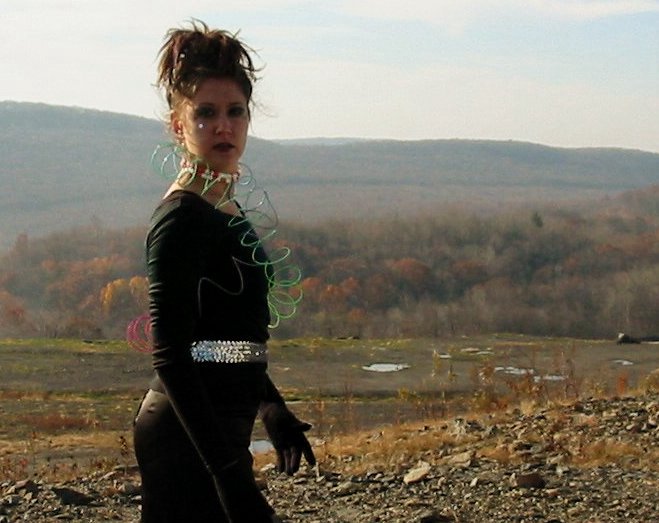
After the trails, food and fun. There is always a theme. This time it was "X-Files." And there were plenty of "strange encounters" provided by the Renaissance Players from Manheim. Here are some of the space babes. I would have included some of the "men in black" but they aren't nearly as pretty. I guess this doesn't really qualify as the "real world" but it's still better than blogging.

The Lost Weekend -- Part Two (Offroading In Coal Country)


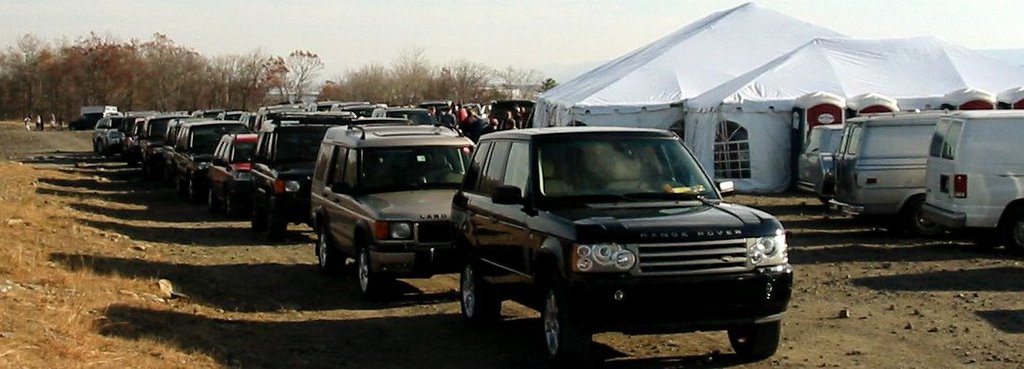
Yesterday "She Who Must Not Be Named" and I went offroading with the Rovers up in the Anthracite region of Pennsylvania. We do this sort of thing a couple of times a year and it's always great fun. "She" loves testing her driving skills in rough country, and afterwards everyone gets together for food and festivities.

Damn, this real world is starting to get addicting.

The Lost Weekend -- Part One (Chocolatetown)


Not much blogging this weekend. Real life intruded.

I spent most of one day bushwacking up at our place in the mountains. The weather's been cool and mostly clear -- an ideal time for cutting out underbrush. It's a constant battle. If you don't stay on it the forest will slowly, but surely, overwhelm everything. So, it's death to bushes, vines, seedlings and shoots. Nice workout, but I'm still feeling it in my arms.

Fall has turned ugly. Just a couple of weeks ago the trees were gorgeous, with vibrant bright colors. Now, up in the mountains the they are mostly bare -- gray and dull brown punctuated by dark evergreens. When the sky is overcast, as it often is this season, the effect is just plain ugly. Soon all the leaves will be down and it will be time to clear them up. A lawn service guy will take care of most of it, but I want to get the brush cut out before he comes. Ah, the endess joys of home ownership.

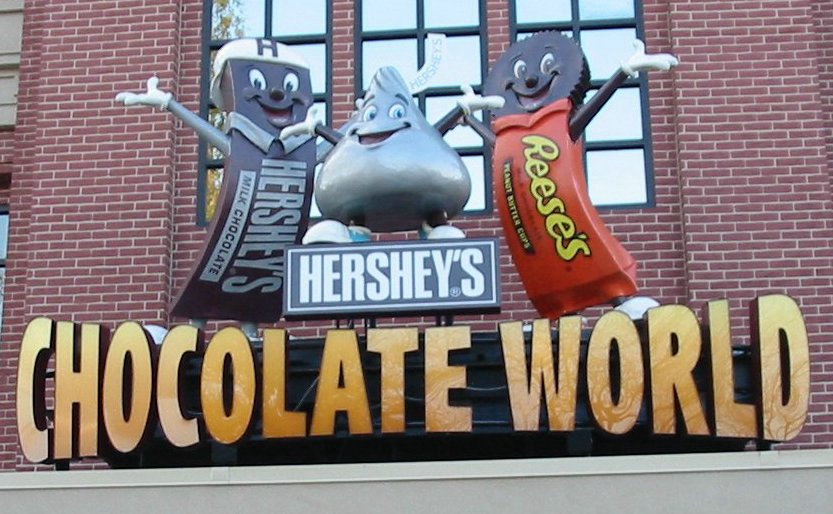
"She Who Must Not Be Named" and I drove down to Hershey with some friends for dinner. Of course, with Christmas season coming up, we stopped by "Chocolate World" at Hersheypark to pick up this and that at the store there. After seemingly interminable browsing through the candy racks we left with several pounds of chocolate. Then on to the village of Union Deposit and Union Canal House for dinner.

It's an old inn dating from the middle of the eighteenth century that had its heyday during the first half of the nineteenth when it served traffic on the Union Canal, from which it now takes its name.

The Union Canal was part of a vast system of canals constructed in the US from the late eighteenth century until the middle of the nineteenth. The purpose was to link the commercial cities of the eastern seaboard with the rich interior of the continent. There was intense competition among the major cities, Boston, New York, Philadelphia, and Baltimore, to be the first to linke to what was then called the "Northwest" -- today the Midwest. Of course, New York won that race with the completion of the Erie Canal in 1825.

Pennsylvania's entry into the race was the "Main Line," designed to link Philadelphia with Pittsburgh and the Ohio valley. The Union Canal was an important element in that system, linking the Schuylkill and the Susquehanna rivers. The Main Line was never really competitive with the Erie for the simple fact that Pennsylvania had no water route through the Appalachian Mountains. What emerged was a system of local canals and rivers linked together in the middle of the state by the Allegheny Portage Railroad. The whole system was cumbersome and was soon replaced by railroads. The canals, however, did for a couple of decades provide significant economic stimulus to agricultural communities in central and eastern Pennsylvania. The village and inn evoke that marvelous era.

It was a pleasant evening -- good friends, good conversation, and well-prepared unpretentious food. Then home and to bed without any blogging. Aaaaah!

You know, blogging is fun, but I really should try to engage the real world more often.

Sunday, November 13, 2005

Condi/Cheney Achieve Partial Victory at Mideast Summit


Mainstream Media Rule of Thumb -- In stories about the administration, always accentuate the negative.

AP reports:
MANAMA, Bahrain - A U.S.-backed Mideast democracy and development summit ended in rancor Saturday despite adoption of two initiatives that are part President Bush's push to expand political freedom in a region dominated by monarchies and effective single-party rule.

A draft declaration on democratic and economic principles was scuttled after Egypt insisted on language that would have given Arab governments greater control over charitable and good-government organizations.

Read it here.

Despite the negative tone of the piece, one that is evident in all MSM reports, the conference was not without positive results. The article notes:

Participants in the Forum for the Future session announced a $100 million fund to promote economic enterprise in a region where populations are growing and unemployment is often high for young men. The fund includes $50 million from the United States, with contributions from Egypt, Morocco and Denmark.
...
The conference also launched a $50 million foundation aimed at promoting democracy and political reform in the Middle East. Both initiatives were shepherded by Deputy Assistant Secretary of State Liz Cheney, the vice president's daughter...

Liz Cheney! I had wondered what had become of her since the election.

Granted this is pretty small beer, but it is a step in the right direction and the negative tone of the overall coverage is certainly not warranted. The Egyptian objection to allowing NGO's to operate in their country without even registering with the government is valid and unremarkable, but that is what the MSM chose to emphasize, rather than the small victories.

Sigh!

Gateway Pundit is all over this story, making much the same point as do I, but he goes where the MSM dares not tread and puts the conference within the context of democratic change throughout the Middle East. He writes:

This was the second year that representatives from Middle Eastern countries met to build commitment to democracy in the historically troubled region. Since the countries first met last year there have been tremendous moves towards democracy and human rights in the region, including:

* Successful elections twice in Iraq
* Successful elections twice in Afghanistan
* Violence free (for the most part) change of government in Lebanon
* Democratic Elections in Palestine
* Pardons for jailed democracy reformists in Saudi Arabia
* Women rights guarantees in Kuwait
* Movement in Egypt towards reform
* Reform in Libya
* Historic talks between Israel and Pakistan
* Israel pullout from Gaza
* Massive Protests against Al Qaida in Morocco
* Protests against Al Qaida in Jordan

Surely, there is work to be done, but...
has the Mideast ever had a year like this past one?

Indeed!

Read it here.

UPDATE:

Condi has extended her stay in the region because there is a possibility that there might be a breakthrough on the Israeli-Palestinian negotiations.

LA Times reports:

RAMALLAH, West Bank -- Under intense lobbying from Secretary of State Condoleezza Rice, Israel and the Palestinians edged toward an agreement today on opening a border crossing between Gaza and Egypt.

The crossing, at Rafah, along Gaza's southern border, has been viewed by Palestinian leaders as an essential gateway for ordinary Gazans, and a potentially critical portal for trade.

Read it here.

Go Condi..., go Condi..., go Condi..., go Condi!!!

She did it.

Happy Birthday Penn!


On this day in 1749, inspired by Benjamin Franklin's pamphlet, Proposals for the Education of Youth in Pensilvania, a group of two dozen citizens of Philadelphia met to form an Academy. Their plan specified that the academy should be non-sectarian and should prepare students for careers in business and public service, rather than in the clergy. Franklin himself agreed to serve as President of the Board of Trustees. Two years later the Philadelphia Academy opened its doors and from that beginning grew into today's University of Pennsylvania, one of the great unversities of the nation, indeed the world. Here are some pictures of the campus as it appears today.

Saturday, November 12, 2005

Chancellor Merkel, At Last!


At last, Germany has a government. Six weeks ago Angela Merkel's Christian Democratic Union narrowly defeated the Social Democrats at the polls, but the victory was so narrow that neither major party could form a governing coalition. At last, on Friday, delicate negotiations produced a "grand coalition" of the two major parties that opened the way for her to become the nation's first female chancellor [way to go gal!].

There is some question as to how effective the new government can be. During the campaign Ms. Merkel was widely seen as a German version of Maggie Thatcher -- a dynamic conservative who would bring major reforms to a stagnant economy -- but with her antagonists controling half the government ministries that is no longer in the cards. The New York Times reports:

Mrs. Merkel has survived a perilous passage to becoming the chancellor-designate since the federal elections on Sept. 19. Her party, which had once been expected to win in a landslide, finished in a virtual tie with the Social Democrats, requiring delicate talks to work out the sharing of power.

Mr. Schröder initially refused to yield to her as chancellor, before relenting last month. Then the negotiations to cobble together a coalition were jeopardized by dissension within the Social Democrats and the defection of one of Mrs. Merkel's most prominent conservative rivals.

Even now, the two parties must ratify the agreement. If they do sign off, as is generally expected, Mrs. Merkel would be elected chancellor by Parliament on Nov. 22.

She would emerge from that vote with half her cabinet - including the foreign, finance, and labor ministries - in the hands of her former political opponents, the Social Democrats.

Even more important, Mrs. Merkel has had to set aside many of her proposals for overhauling Germany's economy, including a simpler tax regimen; reform of health care and pensions; and a more flexible labor market. The Social Democrats objected to Mrs. Merkel's proposals to curb unions and to make it easier to dismiss workers.

Plans to restructure the medical and pension systems were also either watered down or deferred. And the Social Democrats succeeded in nudging up the tax rate for people with high salaries.

The result of all this compromise, critics say, is a coalition agreement that has as its boldest initiative an increase in the value-added tax to 19 percent, from 16 percent. The government would use the extra revenue to plug its vast budget deficit, which is in violation of European Union laws.

"This really gives no hope to anybody in Germany for political mobilization," said Claus Leggewie, a political science professor at Giessen University. "Germans would like one idea, one phrase, one catchword to encourage them. This is the lowest common denominator."

Other critics said the agreement would do little to recharge Germany's economy, which has been stagnant for three years. On the contrary, some say the government's plan to whittle down the deficit by raising taxes and cutting spending would further hinder growth.

Read it here.

This seems to fit a broader pattern throughout the West. The bold, often disruptive, initiatives initiated in the era of Reagan and Thatcher are running into ever stiffer opposition. In nation after nation the public has shown a disinclination to engage in radical reform, preferring instead to see small, modulated changes that for the most part leave intact the major institutional arrangements that have evolved gradually over the past half century. Witness, for instance, the widespread political opposition roused by Bush and Blair's bold initiatives in both foreign and domestic policy. These are great men ruling in an age that prefers complacent mediocrity. That is why a glorified hack like Bill Clinton remains so popular.

This frustrates those politicians and pundits, on both the left and right, who long for radical, decisive change and incites them to paroxysms of rage, but it fits well the needs of ordinary people who have organized their lives around existing institutions and arrangements, and ultimately, in a democratic polity, those are the people whose needs must be served.


Friday, November 11, 2005

Peter Drucker Passes


One of the great ones has passed away.

From the Financial Times:
Peter Drucker, the most influential management writer of the modern era, has died age 95. A spokesman for the Claremont Graduate University in California, where Prof Drucker worked since the 1971, said he died peacefully on Friday morning after a short illness.

Prof Drucker remained active until the end of his life. Earlier this year he was honoured with the McKinsey Award for the best article published in the Harvard Business Review during 2004. He had just finished collaborating with colleagues on a reworking of the ideas contained in The Effective Executive, first published in 1966.

Peter Ferdinand Drucker was born in Vienna in 1909. He took a doctorate in public and international law while working as a newspaper reporter in Frankfurt, Germany, and then worked as an economist for an international bank in London. He moved to the US in 1937 and began his teaching career at Bennington College, Vermont. For more than twenty years he was professor of management at the graduate business school of New York University.

Read the whole obit here.

Note, at age 94 he won the McKinsey Prize and had just finished a book at age 95. The only recent figure who comes close to that record for productivity and longevity is Jacques Barzun. Check out Drucker's resume here.